🚀 I Switched from React to Next.js in 24 Hours — Without Watching a Single Tutorial


Most developers open YouTube.
Search “Next.js crash course.”
Watch 4–5 hours.
Still feel confused.
I did the opposite.
No tutorial.
No course.
No roadmap.
I simply opened my React website project… and started converting it.
If you’re curious, this is the exact project I migrated:
🔗 https://www.vishalkaushik.com
And within one day, I was comfortable enough to say:
👉 Now I build everything in Next.js.
This is the story of how confusion turned into clarity.
If you are scared of switching — this might change your approach.
Why I Decided to Skip Tutorials
I already knew React.
I understood:
Components
Props
State
Hooks
Routing
API calls
So what exactly was I afraid of?
Frameworks are not magic.
They are just structure + conventions.
Instead of learning theory, I decided to learn by migration.
Because pain = fast learning.
The Mindset Shift 🧠
I stopped asking:
❌ “How does Next.js work?”
and started asking:
✅ “How would this React feature live inside Next.js?”
Game changed instantly.
Step 1 – Create a Next App
npx create-next-app@latest
Boom. Project ready.
No webpack drama.
No manual routing.
No setup headache.
Already smoother than many React setups.
Step 2 – First Shock: Folder Structure
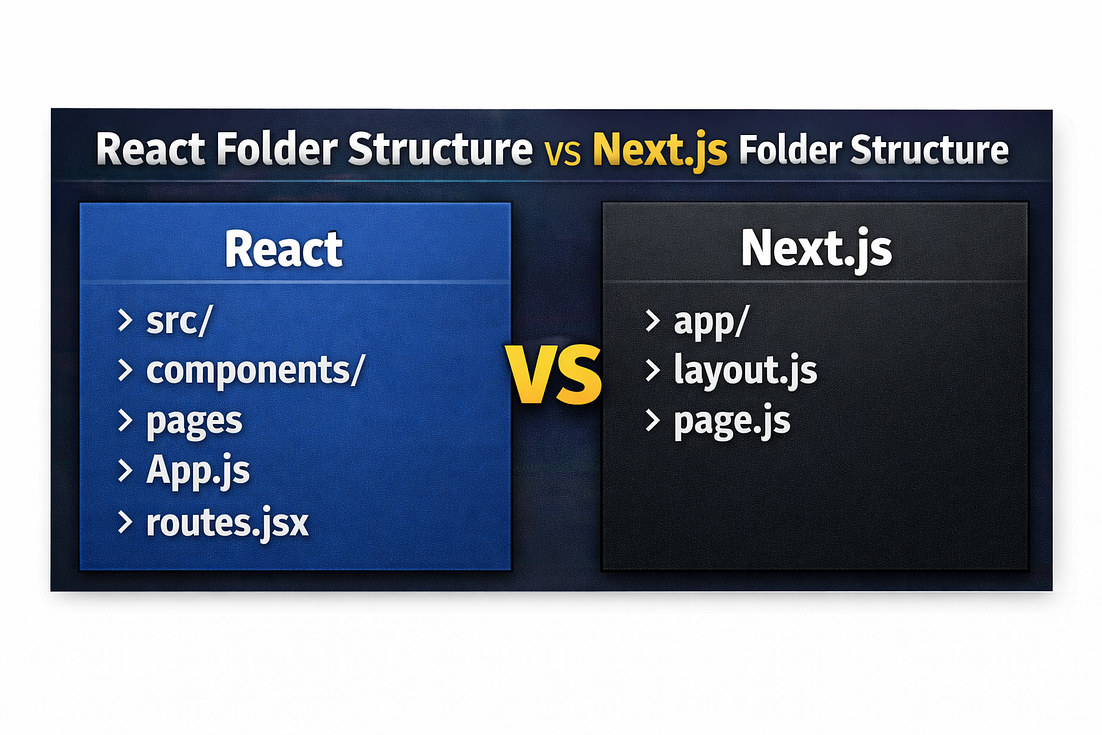
My React brain expected:
Press enter or click to view image in full size
Folder structure difference
src/ components/ pages/ App.js main.jsx routes.jsx
Next.js gave me:
app/ layout.js page.js
I stared at it for 10 minutes.
Then I realized:
👉 page.js = a route
👉 folders = URLs
👉 layout = wrapper
Simple. Powerful.
Step 3 – Routing Without React Router 😮
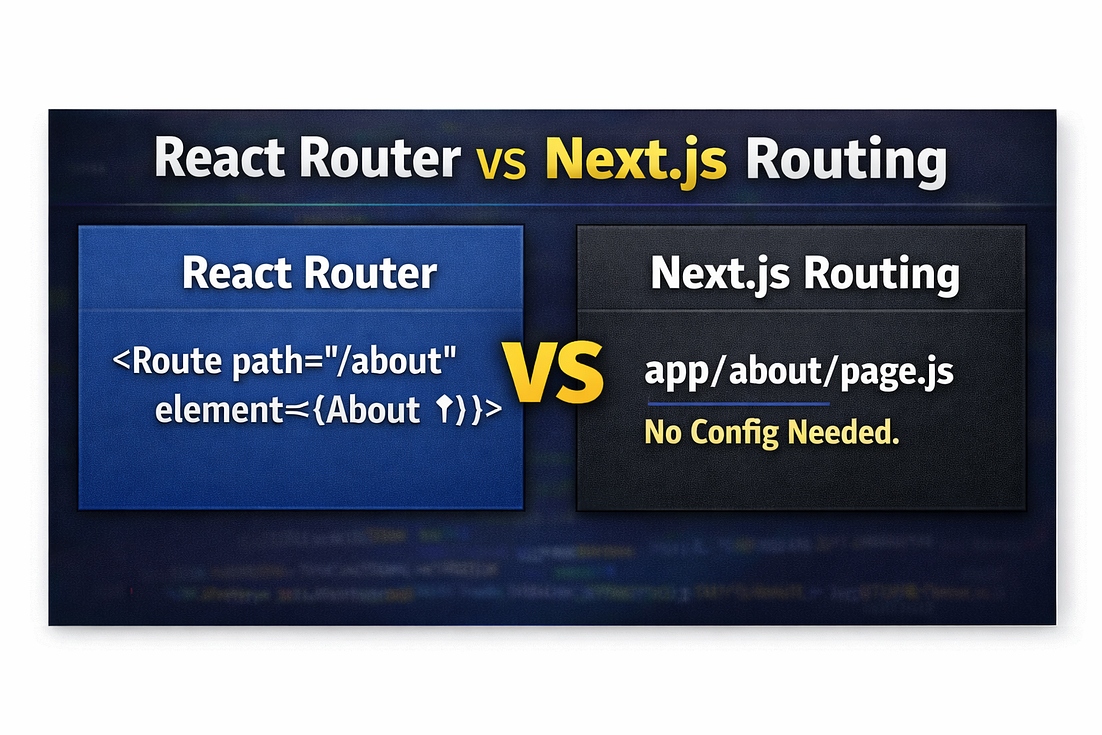
In React I used:
Press enter or click to view image in full size
Routing difference
<Route path="/about" element={<About />} />
In Next.js?
Create a folder.
app/about/page.js
Done.
Visit /about.
No config.
No library.
No mental load.
At that moment I felt:
🔥 Why was I working so hard before?
Step 4 – Moving My Components
This part was easy.
Copy → Paste → Fix imports.
Example:
import Header from "@/components/Header";
That’s it.
Most of my React knowledge worked unchanged.
Big confidence boost.
Step 5 – Client vs Server (The Only New Thing)
Next.js asked:
“Is this interactive?”
If yes → add:
"use client";
Top of the file.
Finished.
Hooks? Works.
State? Works.
Events? Works.
Fear disappeared.
Step 6 – API Calls
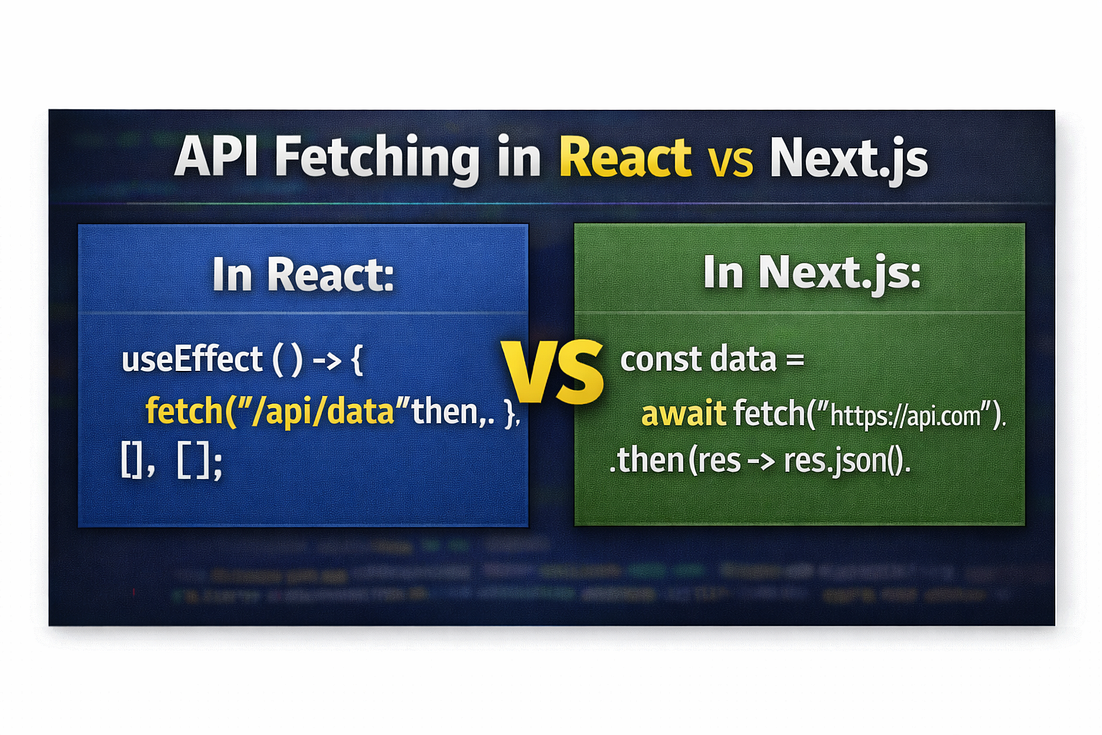
In React I wrote:
Press enter or click to view image in full size
API fetching difference
useEffect(() => { fetch("/api/data").then(...) }, []);
In Next.js I discovered I could do this:
const data = await fetch("https://api.com").then(res => res.json());
Directly inside the component.
No loading madness if not needed.
Mind = blown.
Step 7 – Deployment = Too Easy
React:
Build → configure → host.
Next.js:
Push to GitHub → deploy.
Framework felt production-ready by default.
What Actually Took Me 1 Day?
Not mastery.
Comfort.
After one day I knew:
✅ where files go
✅ how routing works
✅ how to fetch
✅ how to make components interactive
✅ how layouts behave
From there, growth is natural.
Truth Nobody Tells Beginners
You don’t learn frameworks by watching.
You learn frameworks by building inside them.
Struggle creates memory.
My Advice If You Want to Switch
Don’t start from zero.
Take your existing React app and ask:
👉 “How would I build THIS in Next?”
Google only when stuck.
You’ll learn faster than any playlist.
Today…
I don’t open React for new projects.
Next.js gives me:
✨ better structure
✨ backend capability
✨ performance
✨ scalability
And my React knowledge still works.
Best upgrade decision I made.
Final Thought ❤️
Confidence comes from doing, not consuming.
Open the editor.
Break things.
Fix them.
Repeat.
That’s how a React developer becomes a Next.js builder.
If this helped you or inspired you, connect with me.
I love meeting developers who learn by building 🚀
Written by Vishal
Swayam Yatri (स्वयं यात्री) | Content writer ✍️ | Traveler (पथिक) 🏔️